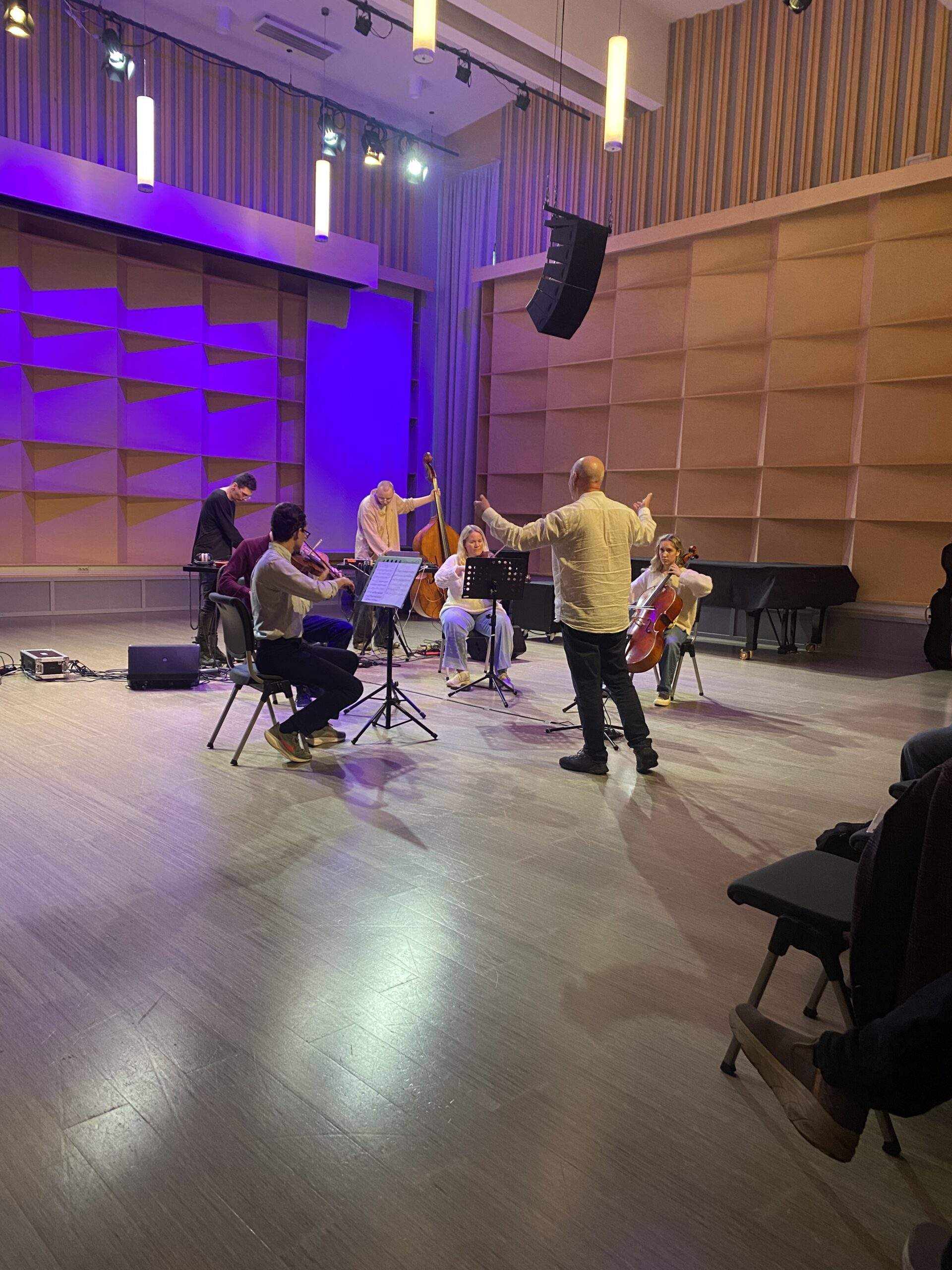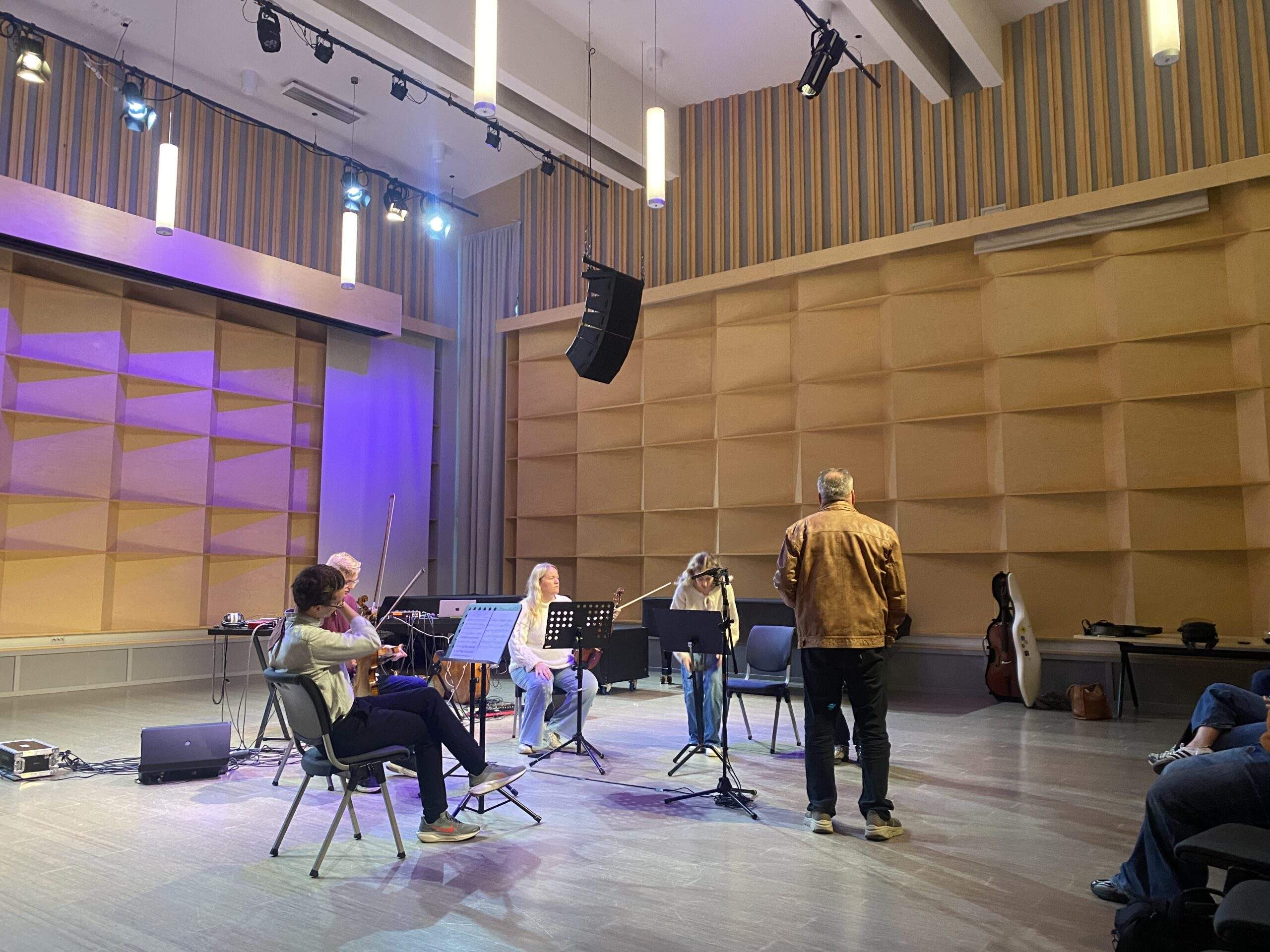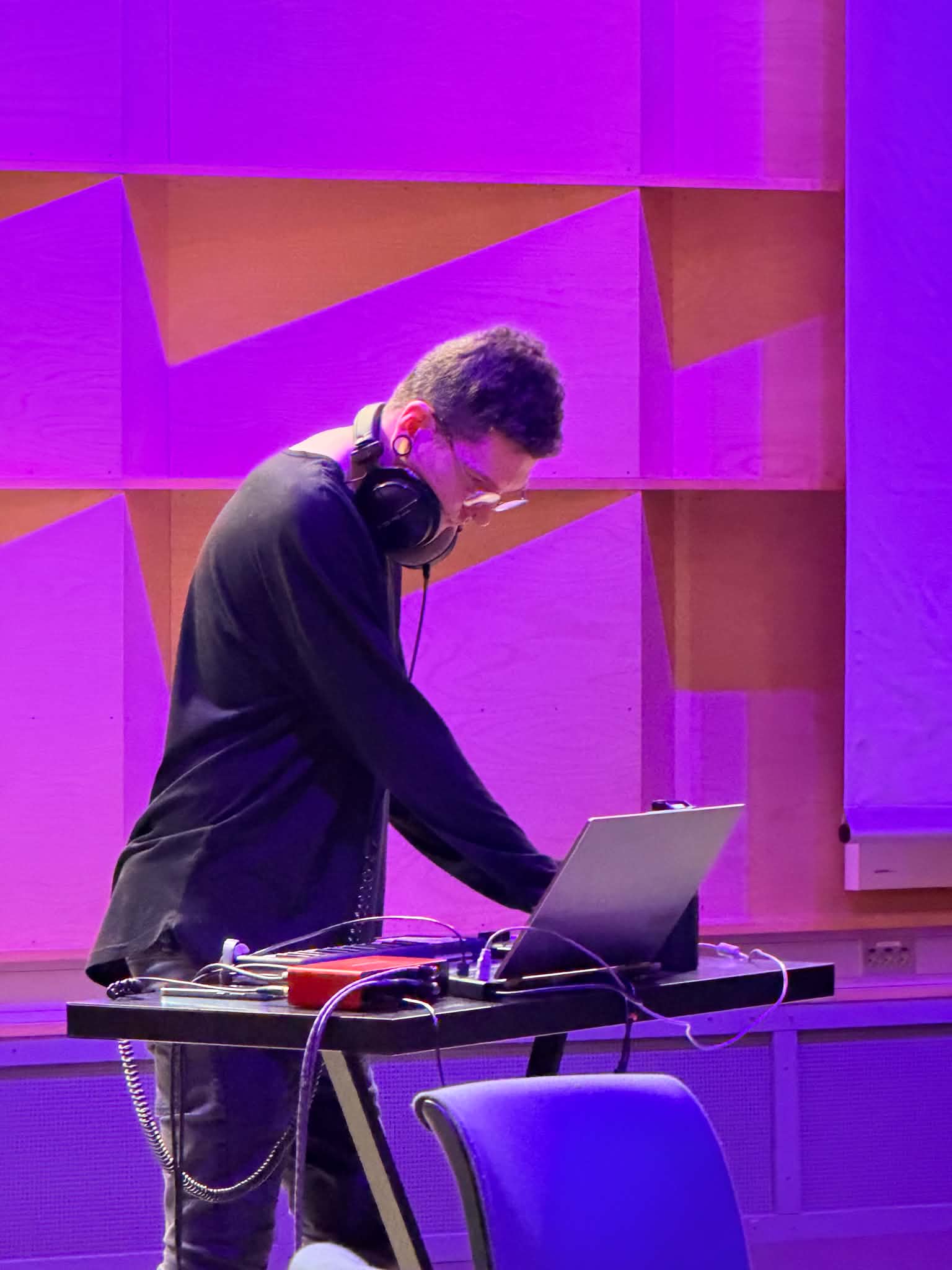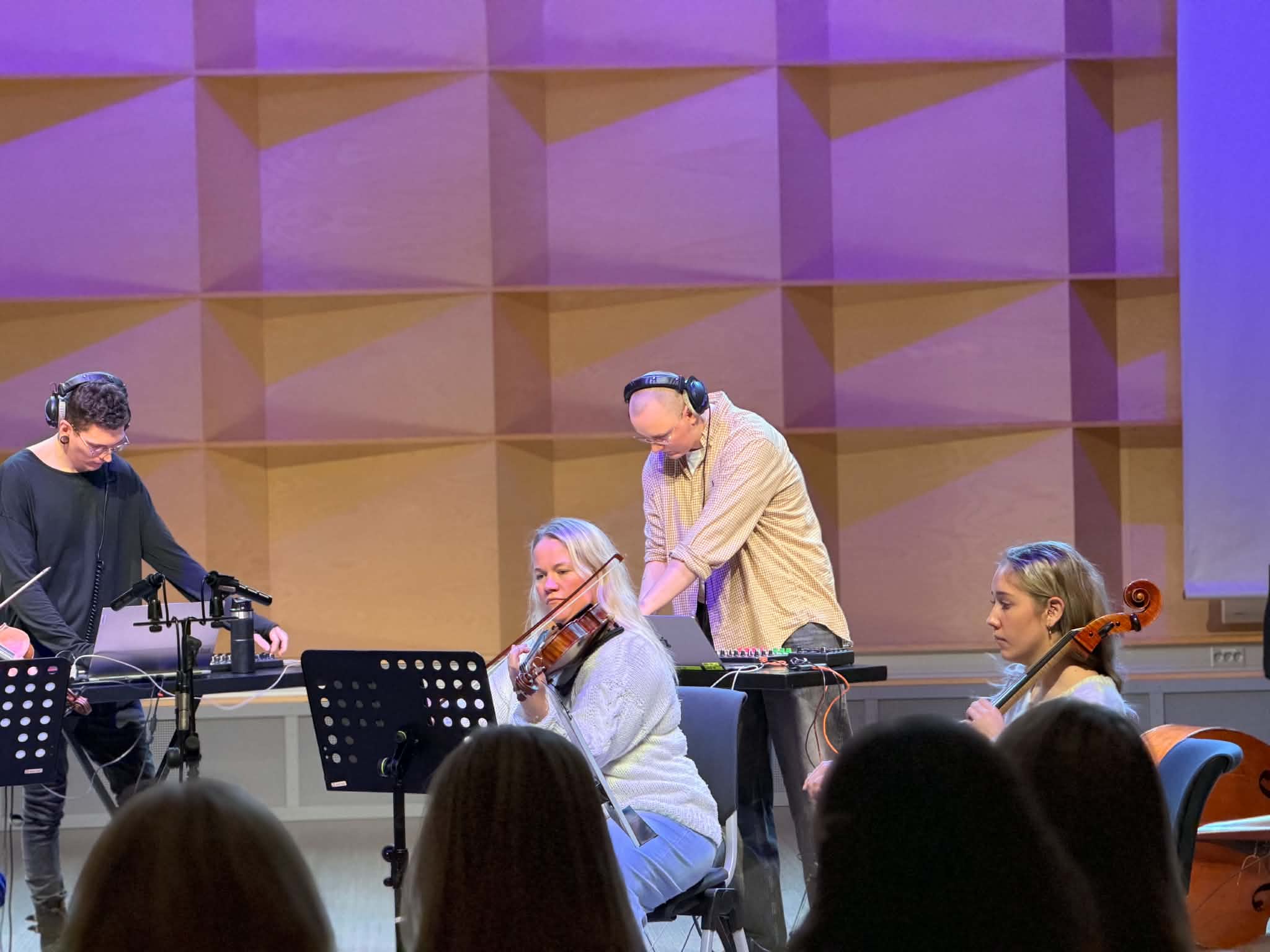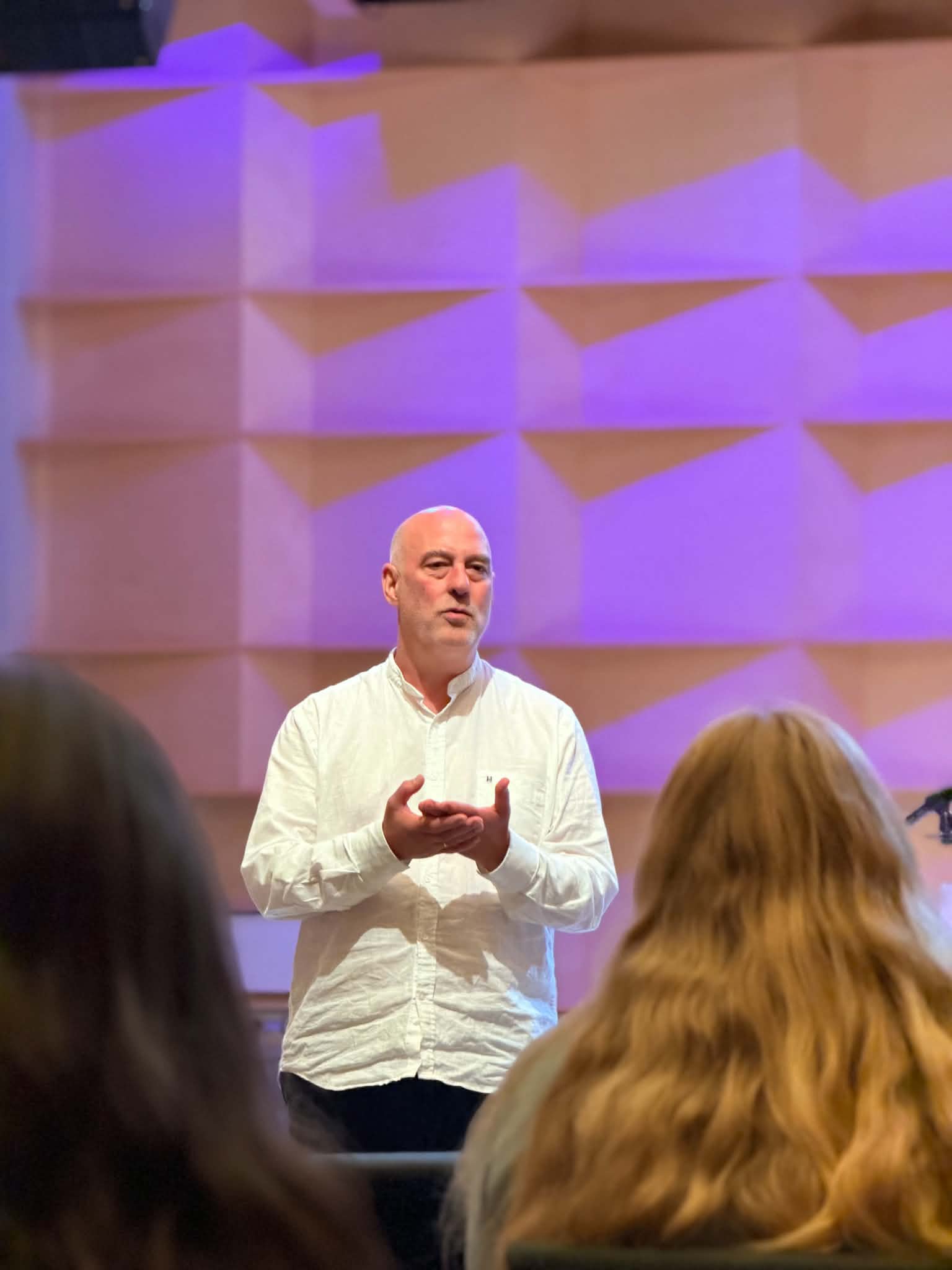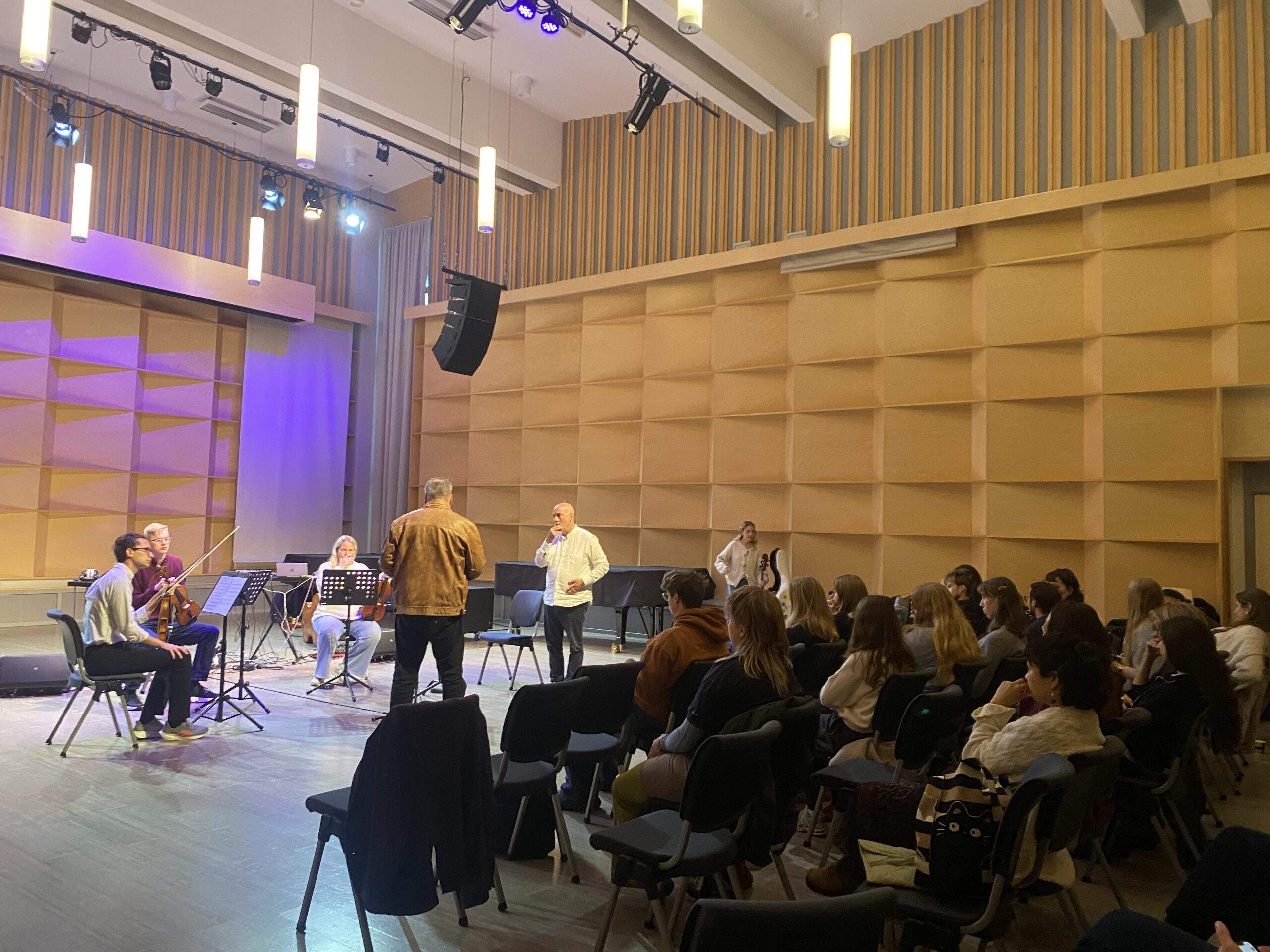
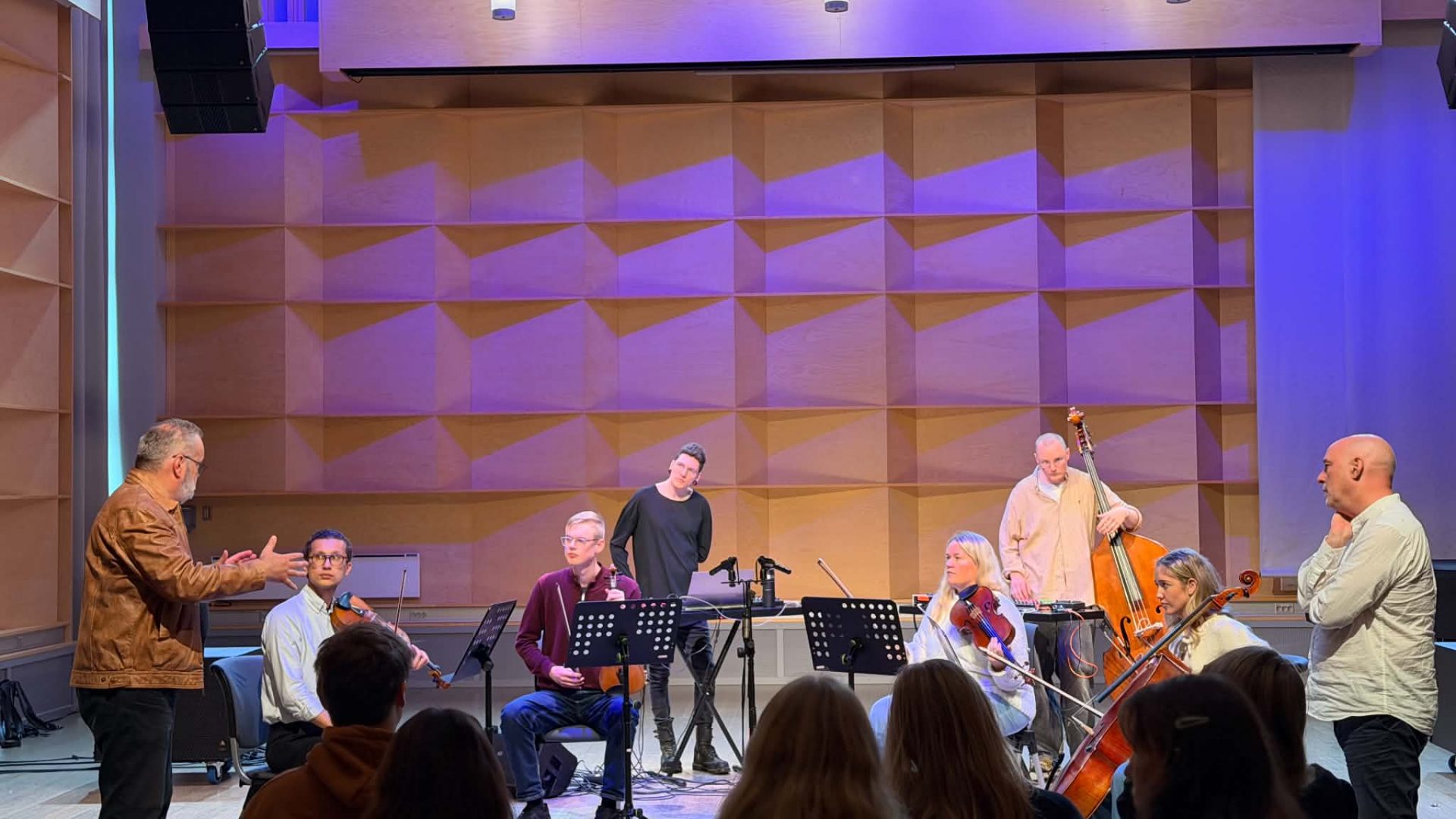
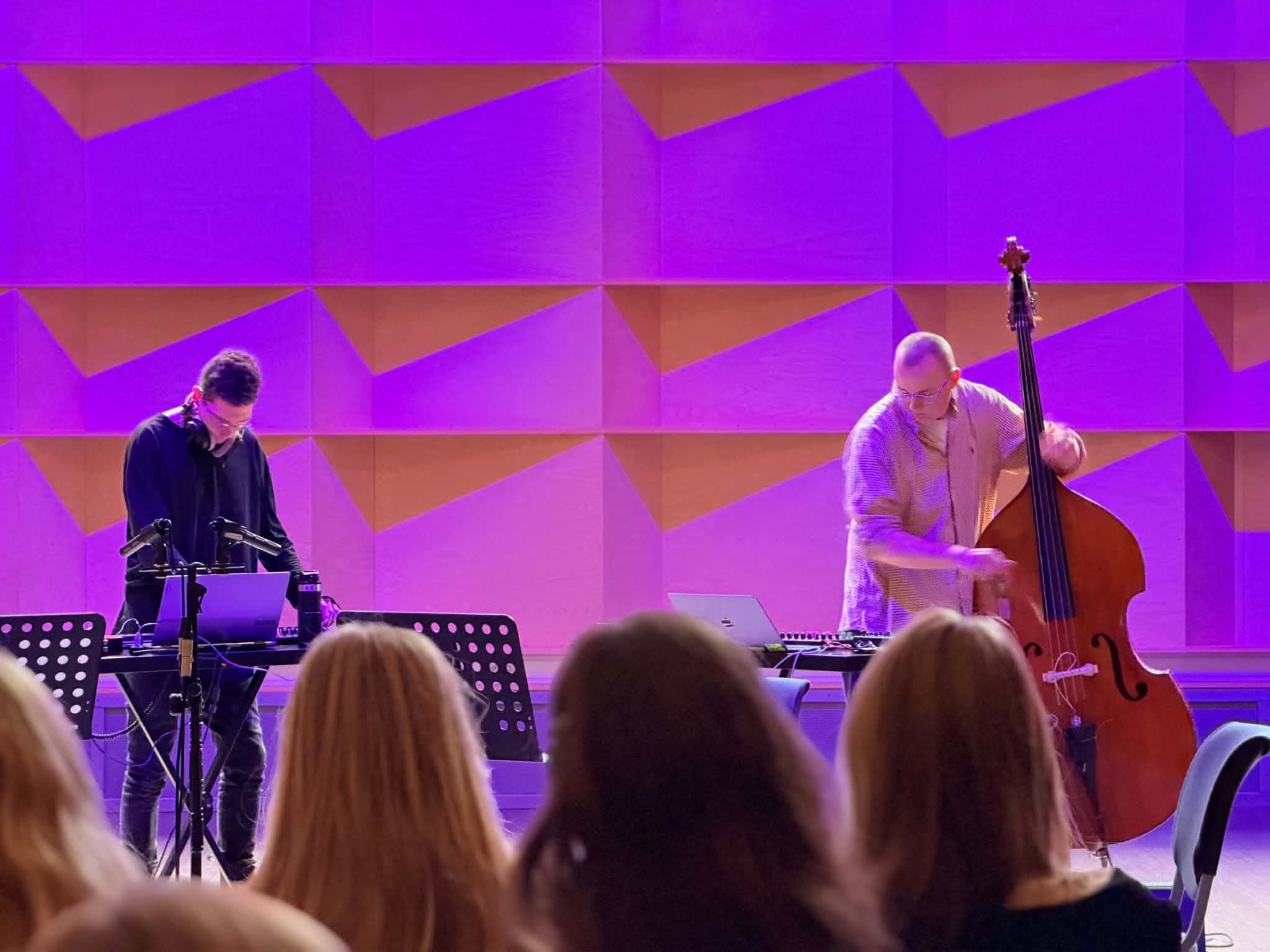
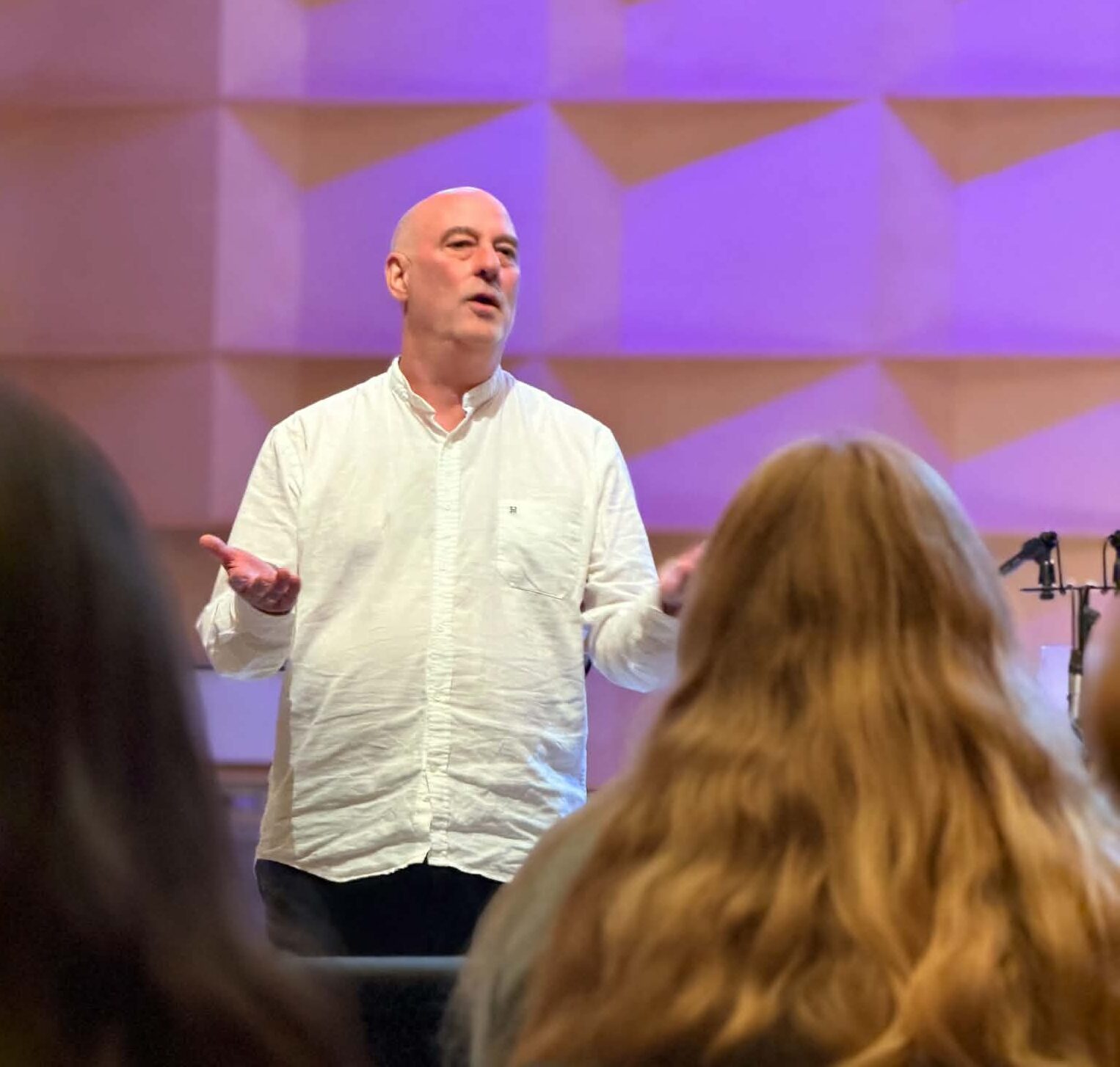
Classical, electronic and popular music students came together this week for the first Remixing Classical session, led by Jan Bang and composer Stig Nordhagen. At the centre of the session was a string quartet and two electronic musicians, bringing together bachelor’s and master’s students from classical and electronic music.
The session began with the string quartet performing the new work by Nordhagen called Chronicle 1 (TBC), before the electronic musicians responded with a short live remix. From there, the format opened into a workshop where the students explored different ways of playing and developing material together.
The students moved between PUNKT’s Live Remix approach, Lawrence “Butch” Morris’ Conduction method, free improvisation and different forms of sampling. Electronic music students captured and processed the live performances, while the classical musicians repeatedly returned to fragments of Nordhagen’s score, reshaping them through different articulations, combinations and textures.
This created a kind of performative sampling. Rather than only recording a sound electronically and replaying it, fragments of the score were repeated and transformed through live performance itself, creating new sonic material that could in turn be captured and processed electronically. One particularly striking moment came when Bang stopped conducting. Rather than stopping with him, the students continued playing and improvising together — even though several of them had little or no previous experience with improvisation.
“We have a special opportunity here at the Faculty of Arts in Kristiansand, with classical, electronic, and popular music environments situated in the same building. The ambition should be more than simply bringing these practices together: we can use these encounters to develop new ways of working, experiment with new formats and push the field and its boundaries.”
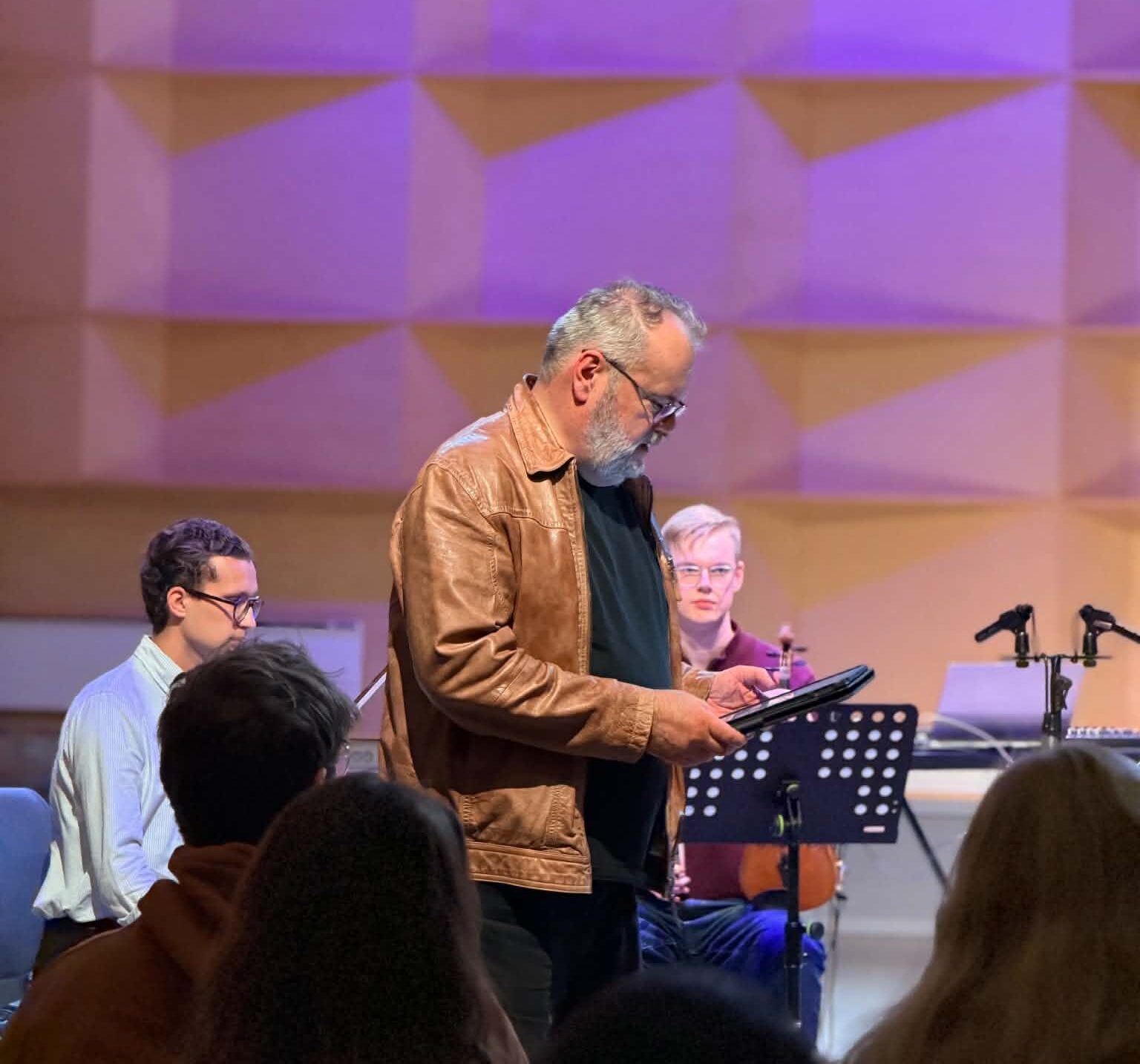
Jan Bang
For Nordhagen, the session offered an opportunity to hear his composition develop beyond a conventional performance of the score. “Even when they were improvising, they were still departing from the composition. It was interesting to hear sections taken apart, repeated and turned into new textures. Students should explore these ways of working while they are studying. It is much easier to develop this kind of practice now than to realize five years later that it was something you wished you should be able to do.”
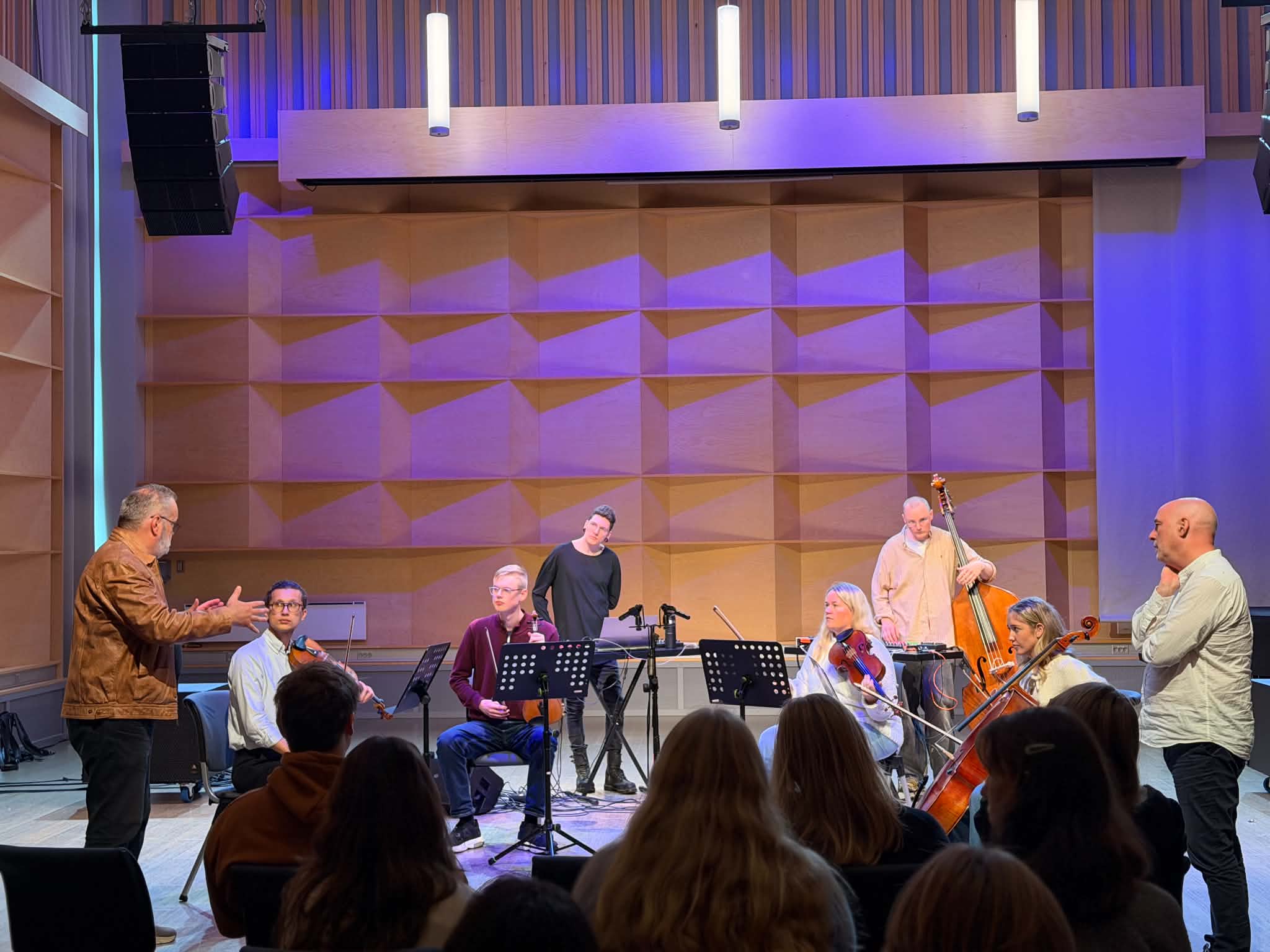
Stig Nordhagen
Anne Camilla Furre Thommesen, project co-lead, has seen a strong desire among classical students for more opportunities to collaborate with electronic and popular music students.
“Our classical students have been asking for more opportunities like this for a long time. What was particularly exciting about the session was the students’ willingness to take risks.”
For project lead Andreas Waaler Røshol, the initiative also builds on experiences from earlier project weeks and the wider work of CreaTeME.
One of the clearest messages from previous project weeks has been that students want more hands-on activity, but also more concrete approaches they can actually try. Project weeks are important spaces for developing this kind of craft: giving students practical strategies, a broader vocabulary, and ways of communicating and collaborating across disciplines. The introduction and the project week that follows are designed with this in mind.”
Andreas Waaler Røshol