CreaTeME International - Concert

Live Electronics: An international laboratory

The CreaTeME International Live Electronics Workshops are developed by project leader Associate Professor Ingolv Haaland, Professor Jan Bang and Associate Professor Andreas Waaler Røshol. Together they form an international laboratory for artistic and pedagogical experimentation.


During the two-year period 2025–2026 the project has visited institutions in Singapore, Malaysia, Thailand, Vietnam, Italy, Germany, Switzerland, Poland, Sweden, Denmark and Estonia. Haaland leads the project and also performs as a pianist. Bang provides the artistic core through his long-standing practice in live sampling and live electronics, developed since the 1990s and through the environment around the Punkt Festival.

Participating artists and students change from workshop to workshop. They are drawn from the University of Agder, partner institutions and a wider network of established international musicians. This rotating format allows different students to take part in the project.

From the Drop-in Ensemble to CreaTeME International
The Electronic Music Drop-in Ensemble was developed by Haaland and Røshol and first brought to the Royal Academy of Music in Aarhus and the Malmö Academy of Music. Students worked in groups, focusing on listening, adaptation and the creation of an improvised soundscape.

The CreaTeME International Live Electronics Workshops continue some of these principles, but with a stronger focus on live electronics and live sampling as active members of the ensemble.

One aim is to examine how these practices function in higher music education. The work is documented through video recordings, interviews and student feedback.


Listening and interaction
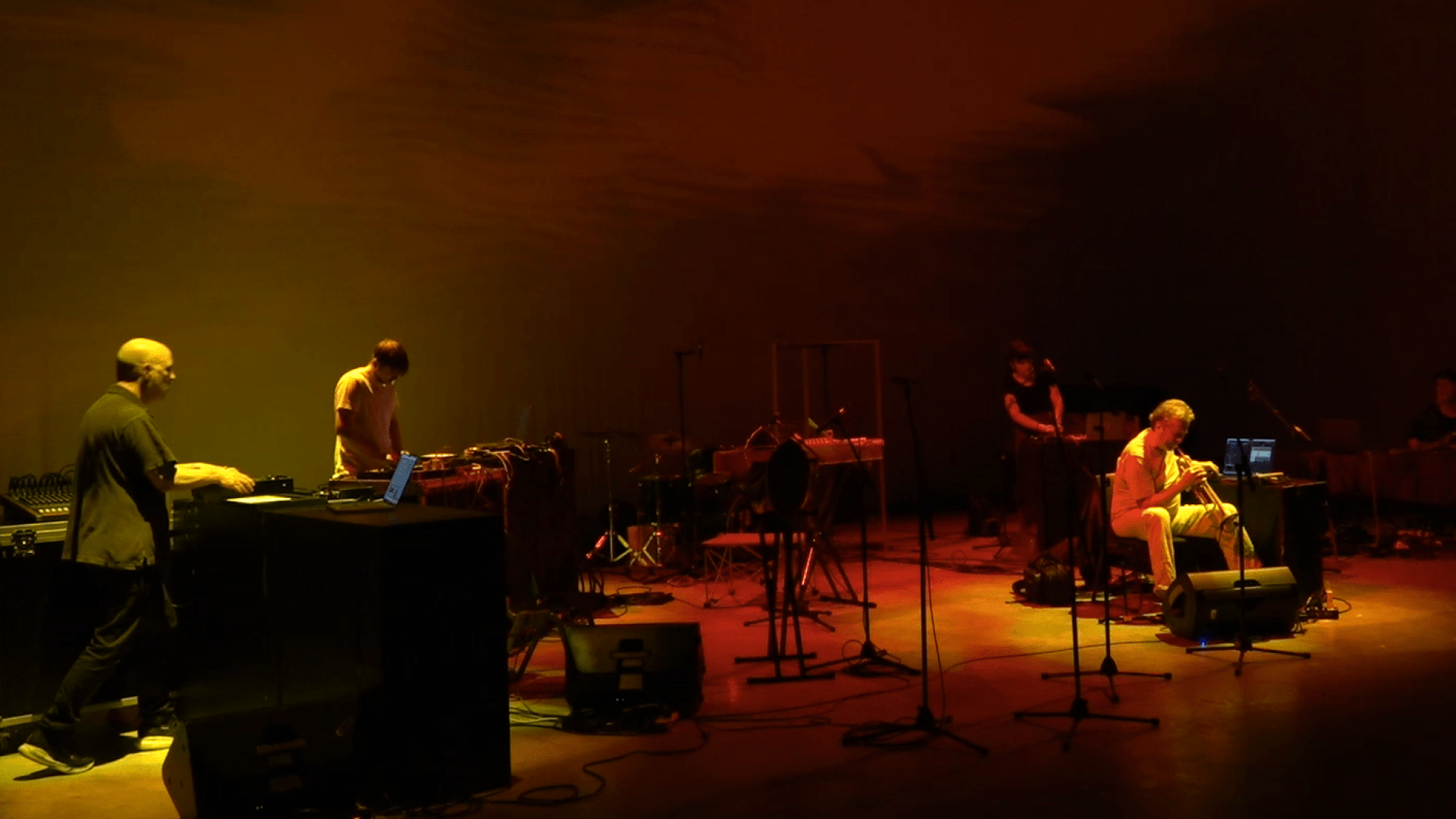
A recent workshop and performance at The College of Music, Mahidol University in Thailand provides one example. The group included Bang, trumpeter Nils Petter Molvær, guitarist Eivind Aarset, UiA alumnus and live electronics performer Even Røstad, Ingolv Haaland on piano, and master’s student Hannah Torres Lærum (vocals and live electronics).

Bang and Røstad perform in the present while also working with the ensemble’s immediate past, capturing and transforming the soundscape as it unfolds. In one section of the performance, Molvær introduced an improvised melodic idea. Hannah describes what happened next:

“When I heard the melodic line Nils Petter introduced, the words suddenly came to me: ‘Can you hear me? Can you hear me speak?’”

As she explains: “Even though it may sound rehearsed, it is the immediate, unpredictable and intuitive that shapes what we play.”

Exchange and online collaboration
CreaTeME operates through a continuous push and pull between the university and its partner institutions (Waaler, 2025) where CreaTeME brings artistic and pedagogical ideas to partner institutions, but also brings new experiences and approaches back to UiA.


Alongside the physical workshops, opportunities are being developed for students to collaborate online across institutions. This work draws on Love Your Latency pedagogy — which treats network delay as a creative parameter rather than an obstacle — and on experiences from the Intercultural Digital Co-Lab Pilot with Javeriana University in Colombia.

The CreaTeME International Live Electronics Workshops are developed by project leader Associate Professor Ingolv Haaland, Professor Jan Bang and Associate Professor Andreas Waaler Røshol. Together they form an international laboratory for artistic and pedagogical experimentation.


During the two-year period 2025–2026 the project has visited institutions in Singapore, Malaysia, Thailand, Vietnam, Italy, Germany, Switzerland, Poland, Sweden, Denmark and Estonia. Haaland leads the project and also performs as a pianist. Bang provides the artistic core through his long-standing practice in live sampling and live electronics, developed since the 1990s and through the environment around the Punkt Festival.

Participating artists and students change from workshop to workshop. They are drawn from the University of Agder, partner institutions and a wider network of established international musicians. This rotating format allows different students to take part in the project.

From the Drop-in Ensemble to CreaTeME International
The Electronic Music Drop-in Ensemble was developed by Haaland and Røshol and first brought to the Royal Academy of Music in Aarhus and the Malmö Academy of Music. Students worked in groups, focusing on listening, adaptation and the creation of an improvised soundscape.

The CreaTeME International Live Electronics Workshops continue some of these principles, but with a stronger focus on live electronics and live sampling as active members of the ensemble.

One aim is to examine how these practices function in higher music education. The work is documented through video recordings, interviews and student feedback.


Listening and interaction
A recent workshop and performance at The College of Music, Mahidol University in Thailand provides one example. The group included Bang, trumpeter Nils Petter Molvær, guitarist Eivind Aarset, UiA alumnus and live electronics performer Even Røstad, Ingolv Haaland on piano, and master’s student Hannah Torres Lærum (vocals and live electronics).

Bang and Røstad perform in the present while also working with the ensemble’s immediate past, capturing and transforming the soundscape as it unfolds. In one section of the performance, Molvær introduced an improvised melodic idea. Hannah describes what happened next:

“When I heard the melodic line Nils Petter introduced, the words suddenly came to me: ‘Can you hear me? Can you hear me speak?’”

As she explains: “Even though it may sound rehearsed, it is the immediate, unpredictable and intuitive that shapes what we play.”

Exchange and online collaboration
CreaTeME operates through a continuous push and pull between the university and its partner institutions (Waaler, 2025) where CreaTeME brings artistic and pedagogical ideas to partner institutions, but also brings new experiences and approaches back to UiA.


Alongside the physical workshops, opportunities are being developed for students to collaborate online across institutions. This work draws on Love Your Latency pedagogy — which treats network delay as a creative parameter rather than an obstacle — and on experiences from the Intercultural Digital Co-Lab Pilot with Javeriana University in Colombia.

Table of Contents

Creative use of Technology in Music Education